
Originally published in The StarPhoenix:
Saskatchewan has a generational opportunity to supercharge its economic future. We should seize it. Recent agreements with Alberta and B.C. have shown that Ottawa is prepared to make a new deal with the West. Let’s use the new spirit of cooperative federalism to land a deal for Saskatchewan’s nuclear industry that will power our economy for decades to come.
After a frosty decade, relations between Regina and Ottawa have noticeably thawed. Premier Scott Moe and Prime Minister Mark Carney have cultivated a positive relationship around notable trade wins. These include Cameco’s massive deal to export $2.6 billion worth of uranium to India, and reductions to painful Chinese canola tariffs.
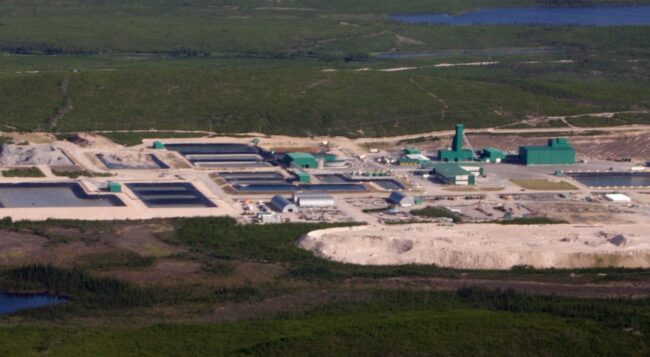
Global demand for nuclear fuel is rising sharply, and Saskatchewan recently approved two new mines in the uranium-rich Athabasca Basin. The vibrancy of the uranium mining sector benefits the entire Western region, with more investments coming to meet the historic order from India.
It’s time to get ambitious, and to think big about how Saskatchewan can fully leverage its natural endowments. One industry with that potential is the nuclear power sector, which is poised to create thousands of exciting new high-tech, well-paid jobs here in the West.
With Cameco’s 2023 joint acquisition of Westinghouse — a world leader in nuclear power — Saskatchewan is positioned to play a greater role in the global nuclear supply chain. We’re currently the world’s second largest exporter of uranium. The opportunity now is to move towards a vertically-integrated nuclear industry, and start using Saskatchewan uranium right here at home to produce electricity.
“We’re currently the world’s second largest exporter of uranium. The opportunity now is to move towards a vertically-integrated nuclear industry, and start using Saskatchewan uranium right here at home to produce electricity.”
Jeff Davis, Director for Saskatchewan, Clean Prosperity
Saskatchewan wants to start by building a BWRX-300 small modular reactor, or SMR. Ontario is developing the first of these reactors in the world right now. By building the next one in Saskatchewan we can grow and strengthen Canada’s burgeoning SMR industry. The economic and energy-security benefits would be national.
The cost of building one of these reactors will be high — between $4 billion and $8 billion. That’s a lot for a small province like ours.
In its October 2025 Saskatchewan First Energy Security Strategy, the provincial government called on Ottawa to pay for 75 per cent of the first reactor. There’s a strong case for federal assistance on this project, and clear precedents.
Saskatchewan is trying to deploy the first nuclear reactor in Western Canada. Just as Ottawa absorbed the first-of-a-kind risk to establish the nuclear industry in the East, it can offer a similar helping hand now in the West.
Beginning in the 1960s the federal government built Canada’s first commercial reactors: Douglas Point in Ontario and Gentilly-1 in Quebec. In the 1970s, Ottawa provided half the financing for New Brunswick’s Point Lepreau Nuclear Generating Station. Today, billions of federal dollars are helping to build small modular reactors at Darlington in Ontario. Now it’s Saskatchewan’s turn.
Saskatchewan has plans to build as many as four reactors by 2050. Not only can this support the province’s economic growth, nuclear power also has the potential to significantly reduce the province’s emissions. If electricity demand doubles by 2050 — as SaskPower thinks it could — switching from coal to nuclear power generation could prevent 17 megatonnes of emissions per year by mid-century.
That’s the equivalent of taking 5.8 million cars off the road. It represents more emissions reductions than the Pathways carbon capture project planned for the Alberta oilsands — with billions in federal funding.
The federal government’s new nuclear energy strategy promises to support provinces in achieving some ambitious goals. These include the construction of up to 10 new large-scale reactors, and the possible deployment of an SMR outside Ontario by 2035. We should move quickly to take them up on the offer.
In Saskatchewan, we know that political winds, like the weather, can change from hour to hour. This is why when opportunity knocks we don’t just open the door, we welcome it in and make it a coffee.
“We need our leaders to sit down together, roll up their sleeves, and use this moment of national unity and ambition to make a deal that will grow Saskatchewan’s nuclear energy sector.”
Jeff Davis, Director for Saskatchewan, Clean Prosperity
We need our leaders to sit down together, roll up their sleeves, and use this moment of national unity and ambition to make a deal that will grow Saskatchewan’s nuclear energy sector — for the future of our province, and for Canada’s.
Photo credit: Turgan